Oven-Roasted Pork Tenderloin
Juicy pork tenderloin with a rosemary-garlic crust, roasted at 200°C for a golden exterior and a perfectly pink interior.
Steps
- 01
Preheat the oven to 200°C (400°F). Let it heat for at least 15 minutes — the beep comes early but the walls need time to saturate.
- 02
Finely chop the rosemary leaves. Combine with the minced garlic, olive oil, salt, and pepper in a small bowl to make a paste.
- 03
Pat the tenderloin dry with paper towels. Rub the garlic-rosemary paste all over the surface. Place on a rimmed baking sheet or in a small roasting pan.
- 04
Roast for 22–25 minutes, until the internal temperature reaches 63°C (145°F). The exterior should be deeply golden. Pull it from the oven — it will carry over to 65–66°C while resting.
- 05
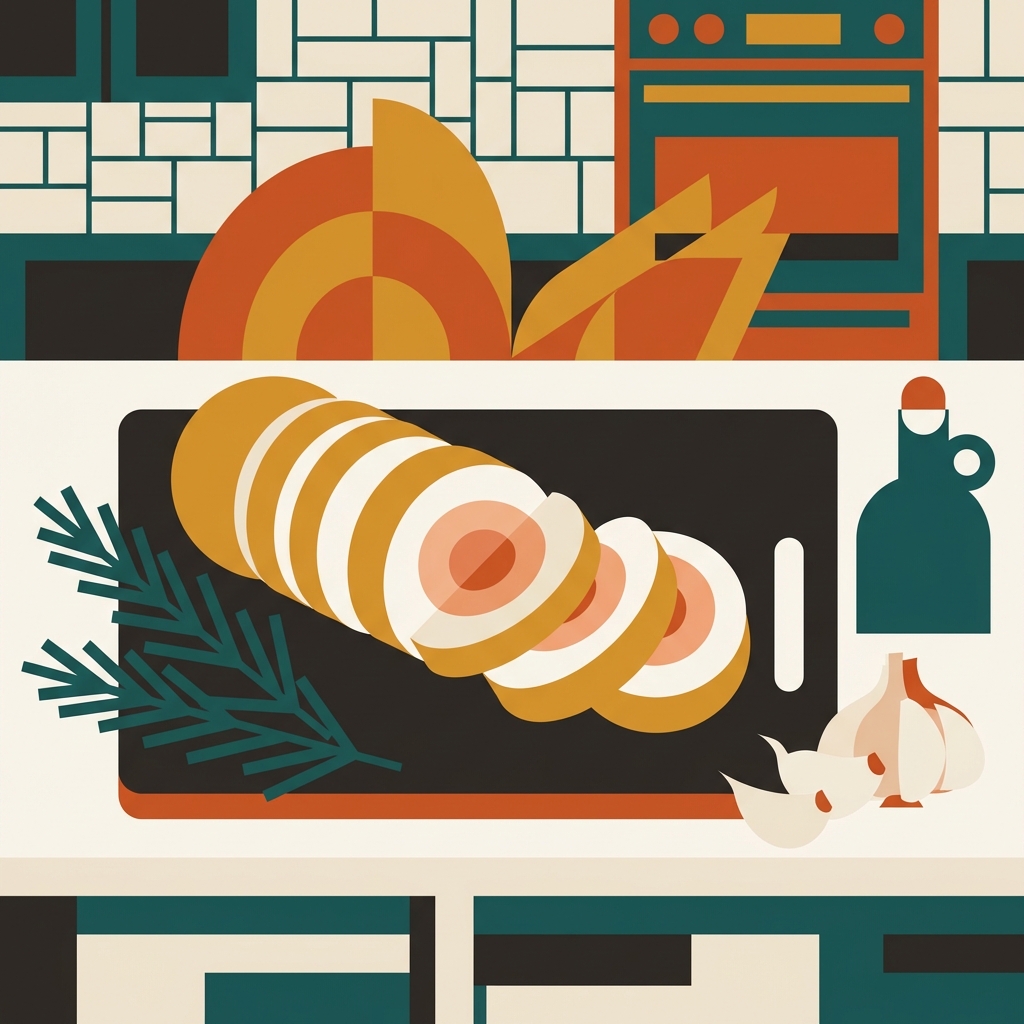
Rest for 5 minutes before slicing. This is not optional — cutting immediately loses the juices that have been pushed to the center during roasting.
Why it worksShould you cover the pan when roasting?
Should you cover the pan when roasting?
For large cuts, use both methods in sequence. Covered roasting traps steam and delivers fast, moist heat that tenderises the meat without browning. Uncovered roasting is dry heat that lets moisture escape from the surface, which is the necessary condition for browning. Cover for the first two-thirds of cooking, then uncover for the final third to build the crust.
Read the full article →Why it worksWhy is it important to rest meat after cooking?
Why is it important to rest meat after cooking?
Resting meat after cooking keeps it juicy when you slice it. Heat tightens muscle fibers and forces moisture toward the center; resting lets those fibers relax and reabsorb that moisture before it runs out onto the cutting board. Internal temperature also continues rising 2–5°C after you pull the meat, so resting is when the last of the cooking happens.
Read the full article →Why it worksWhat is the Maillard reaction?
What is the Maillard reaction?
The Maillard reaction is a chemical reaction between amino acids and sugars that occurs at temperatures above 140°C (280°F). It creates the brown color, complex flavors, and aromas you associate with seared meat, toasted bread, and roasted vegetables. It's not caramelization — that's sugar-only.
Read the full article →Why it worksHow long should you actually preheat an oven?
How long should you actually preheat an oven?
At least 15-20 minutes for roasting and baking — not just until the beep. The beep signals that the air has reached temperature, which takes 5-8 minutes. But the oven walls, floor, and ceiling take much longer to saturate with heat. Fully saturated walls radiate heat directly onto food from the moment it goes in.
Read the full article →