In this guide
Key facts: Conventional ovens heat by radiation and natural convection; convection ovens add a fan that reduces cooking time by 20–25% and can lower temperature requirements by 15–20°C (25–35°F). Oven temperature varies by up to 50°C between models at the same dial setting — an oven thermometer eliminates guesswork.
How an oven actually works
An oven heats food through three mechanisms simultaneously: convection (air movement carrying heat), conduction (direct contact with the pan), and radiation (infrared heat from the hot walls and elements). These three don’t contribute equally. Air is actually a poor conductor of heat — this is why you can put your hand briefly into a 200°C oven but not into 200°C water. The hot walls, floor, and ceiling do most of the radiant work. Air is just the medium that distributes the heat between them.
A typical home oven has a bottom bake element (the primary workhorse) and a top broil element. The oven thermostat cycles these on and off to maintain the set temperature — it’s not a steady state, it’s a cycle of overshooting and correcting. This is why actual oven temperatures fluctuate by 10–20°C above and below the set point throughout a cook. A dial reading 200°C doesn’t mean 200°C inside; it means the average temperature over time is somewhere around there, with peaks and valleys on either side.
The walls need time to heat up, not just the air. A hot-walled oven radiates heat aggressively at food from all sides. A cold-walled oven — one you’ve only preheated to air temperature — cooks much more slowly, even at the same thermostat setting. This distinction explains why preheat time matters so much more than most people think.
Convection vs conventional: what the fan actually does
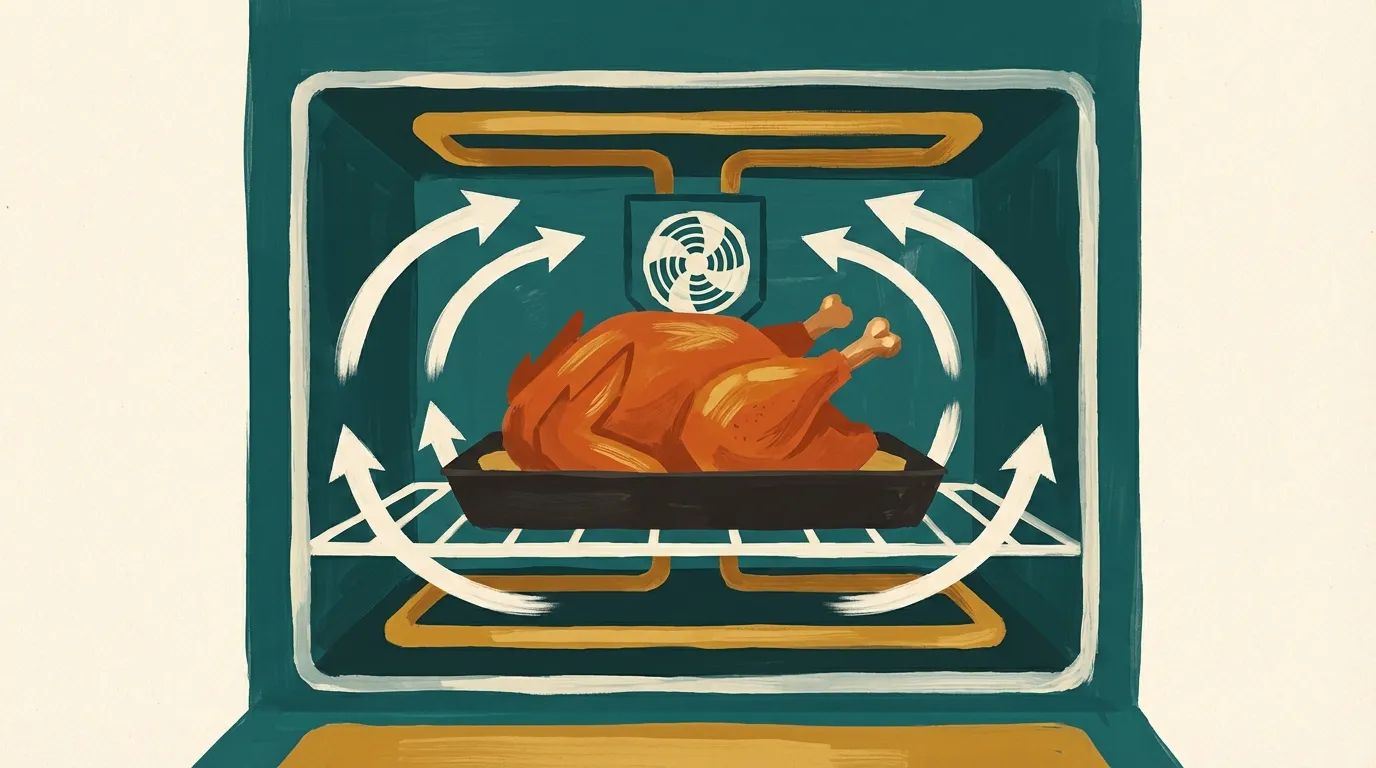
Convection mode adds a fan (and often a third rear element) to circulate air actively through the cavity. Two separate effects follow from this. First, it distributes heat more evenly by eliminating the still, stratified air layers that form in a conventional oven — cool zones near the door, hot zones tight against the elements. Second, and more important for browning: the fan strips away the thin layer of cooler, more humid air that clings to every food surface.
That boundary layer is the thing to understand. When food heats up, moisture migrates to the surface. In still air, this moisture-laden layer sits there and insulates the food from the hot oven air. The surface temperature stays lower than it should, Maillard browning is delayed, and the food steams a little before it roasts. The fan blows that layer away continuously. Heat transfer to the surface accelerates, moisture evaporates faster, and browning begins sooner.
Use convection for anything that benefits from dry-heat browning: roasting chicken and vegetables, cookies, pastry, anything where surface colour and crispiness are the goal. Use conventional for things that need gentle, moist heat or require a precise rise — soufflés, custards, bread that needs strong oven spring, delicate layer cakes where uneven top heat would cause a dome. When converting a recipe written for conventional to convection: reduce temperature by 15–20°C (25°F), reduce time by 15–25%, or split the difference and do both. (Source: McGee, Harold. On Food and Cooking. Scribner, 2004)
Temperature guide
The right oven temperature depends on what you need to happen first — browning the exterior, rendering fat, heating the interior gently, or some combination. Higher temperatures drive surface colour faster; lower temperatures give the interior time to cook through before the outside overcooks. Convection temperatures are lower because the moving air does more work.
| Food | Temp (conventional) | Temp (convection) | Notes |
|---|---|---|---|
| Whole chicken | 200°C (400°F) | 185°C (365°F) | High heat renders fat and crisps skin throughout |
| Chicken pieces (bone-in) | 200–210°C (400–410°F) | 190°C (375°F) | Skin-side up; thighs more forgiving than breasts |
| Chicken breast (boneless) | 190°C (375°F) | 175°C (350°F) | Pull at 71°C internal; dries out fast above that |
| Beef roast (rare to medium-rare) | 220°C sear + 160°C (300°F) | Same two-stage | Sear 15 min, reduce heat; or reverse-sear for large cuts |
| Pork shoulder | 160°C (325°F) | 150°C (300°F) | Low and slow; expect 4–6 hours for 2 kg |
| Pork loin | 180°C (355°F) | 165°C (330°F) | Precision needed — narrow window between done and dry |
| Fish (thick fillets, 3 cm) | 200°C (400°F) | 185°C (365°F) | Faster than you think — 10–15 min |
| Root vegetables | 200–220°C (400–425°F) | 190–205°C (375–400°F) | High heat for browning before softening |
| Leafy / tender vegetables | 220°C (425°F) | 205°C (400°F) | Fast and high; 8–12 min or they collapse |
| Bread (lean) | 220–230°C (425–450°F) | Not recommended | Steam first 10 min; conventional better for crust |
| Cookies | 175°C (350°F) | 160°C (325°F) | Convection more even across multiple trays |
| Casseroles / gratins | 175–190°C (350–375°F) | 160–175°C (325–350°F) | Low enough to heat through before the top burns |
Timing guide
These are starting points. Oven calibration, pan colour, starting temperature of the food, and exact piece size all affect timing. A probe thermometer is more reliable than the clock for anything with a target internal temperature.
| Food | Temp | Time | Doneness cue |
|---|---|---|---|
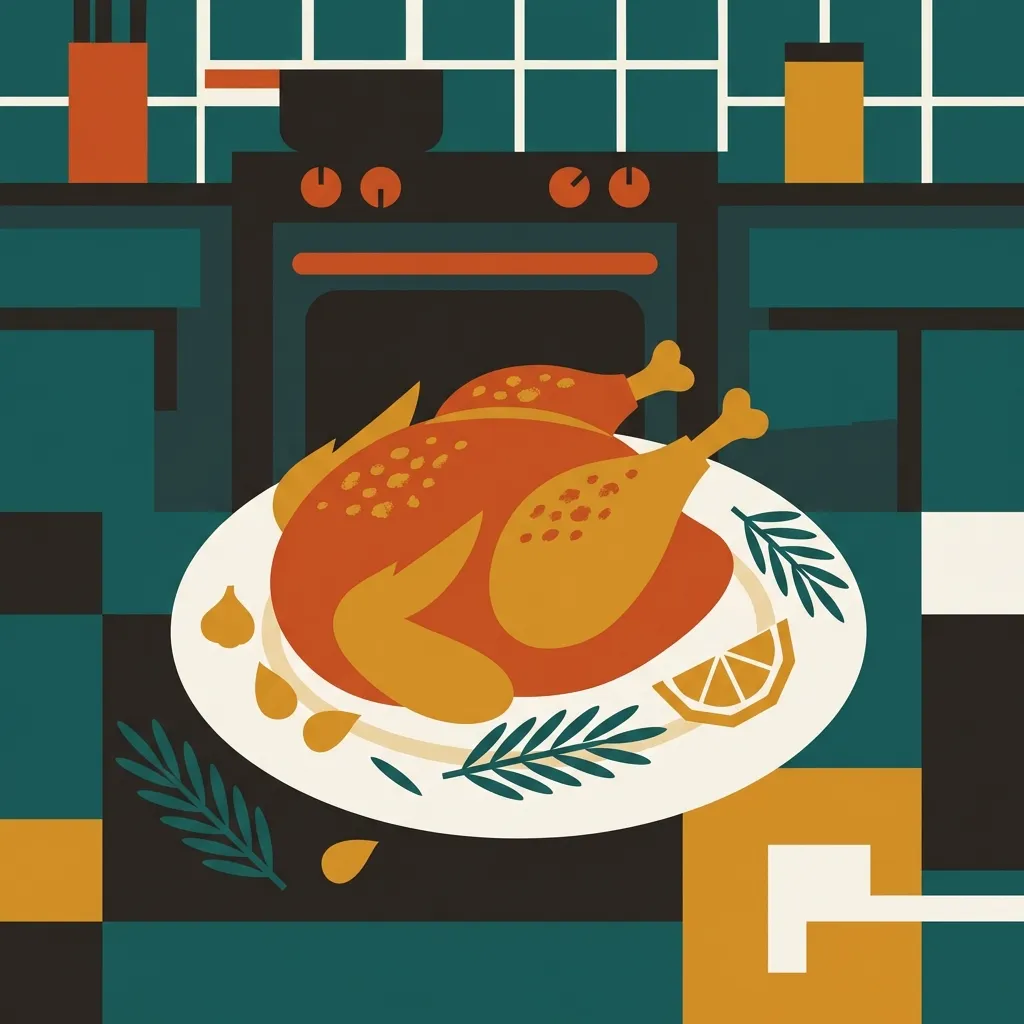
| Whole chicken (1.5 kg) | 200°C (400°F) | 65–75 min | Juices run clear; 74°C at thickest thigh |
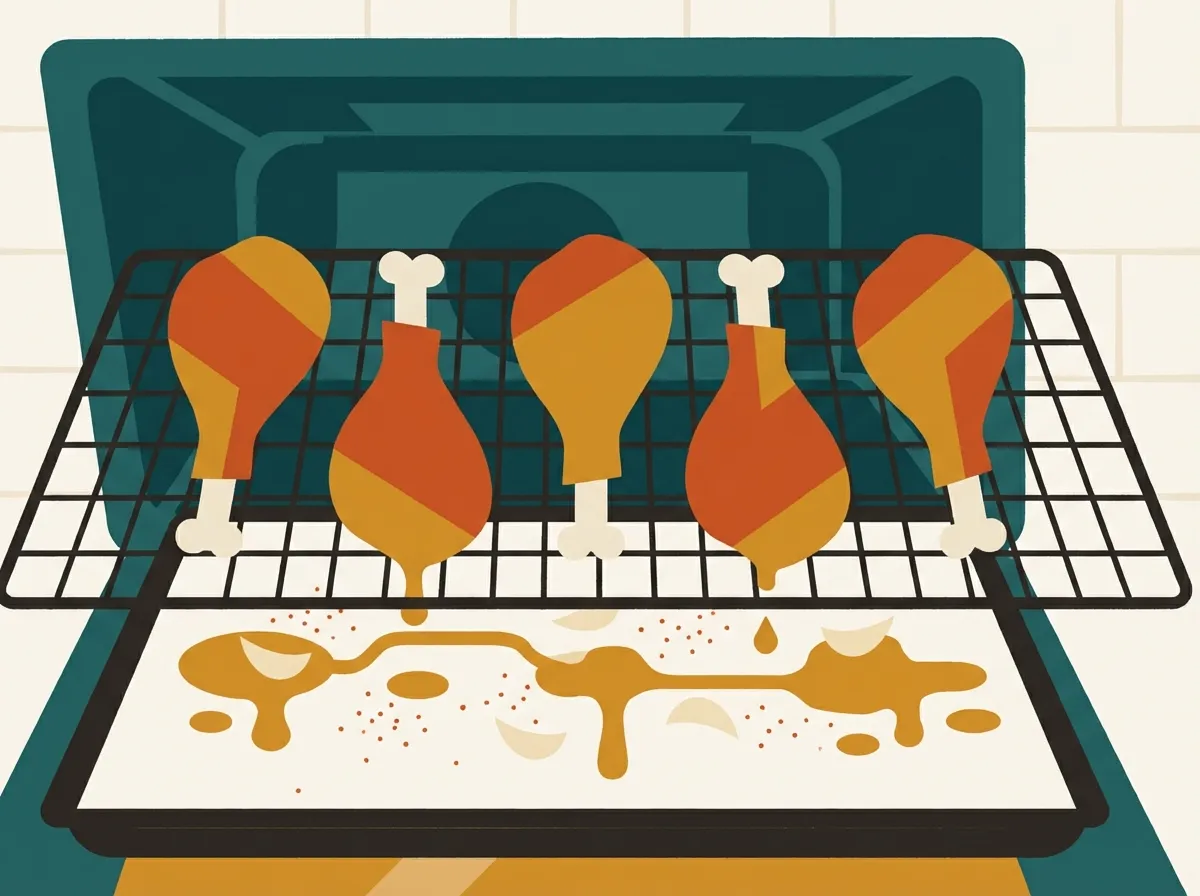
| Bone-in thighs | 200°C (400°F) | 35–40 min | Skin deeply browned; 74°C internal |
| Salmon fillet (3 cm thick) | 200°C (400°F) | 12–15 min | Flakes at gentle pressure; 52–58°C internal |
| Pork tenderloin | 200°C (400°F) | 20–25 min | Slight blush in centre; 63°C internal |
| Beef roast (1 kg, medium-rare) | 220°C sear, then 160°C | 15 min + 40–55 min | 57–60°C internal; rest 10 min before carving |
| Roasted broccoli / cauliflower | 220°C (425°F) | 18–22 min | Edges charred; stems tender at fork |
| Roasted potatoes (cubed) | 210°C (410°F) | 30–40 min | Golden and crisp on cut faces; soft through centre |
| Sheet-pan vegetables (mixed) | 210°C (410°F) | 20–30 min | Caramelised edges; nothing pooling liquid |
| Cookies (standard drop) | 175°C (350°F) | 10–14 min | Edges set and golden; centre looks slightly underdone — it firms as it cools |
| Reheating pizza | 220°C (425°F) | 6–8 min | Cheese bubbling; crust crisped from bottom |
How to get better results
Preheat fully — not just until the beep. The beep signals air temperature, not wall temperature. The oven walls, floor, and ceiling (which do most of the radiant cooking) take 15–20 minutes longer to fully saturate at temperature after the beep. Food placed immediately after the signal sits in hot air but next to walls that are still catching up — it heats slowly and tends to steam. Wait the full 15–20 minutes beyond the beep for roasting and baking. For reheating leftovers, this matters much less.
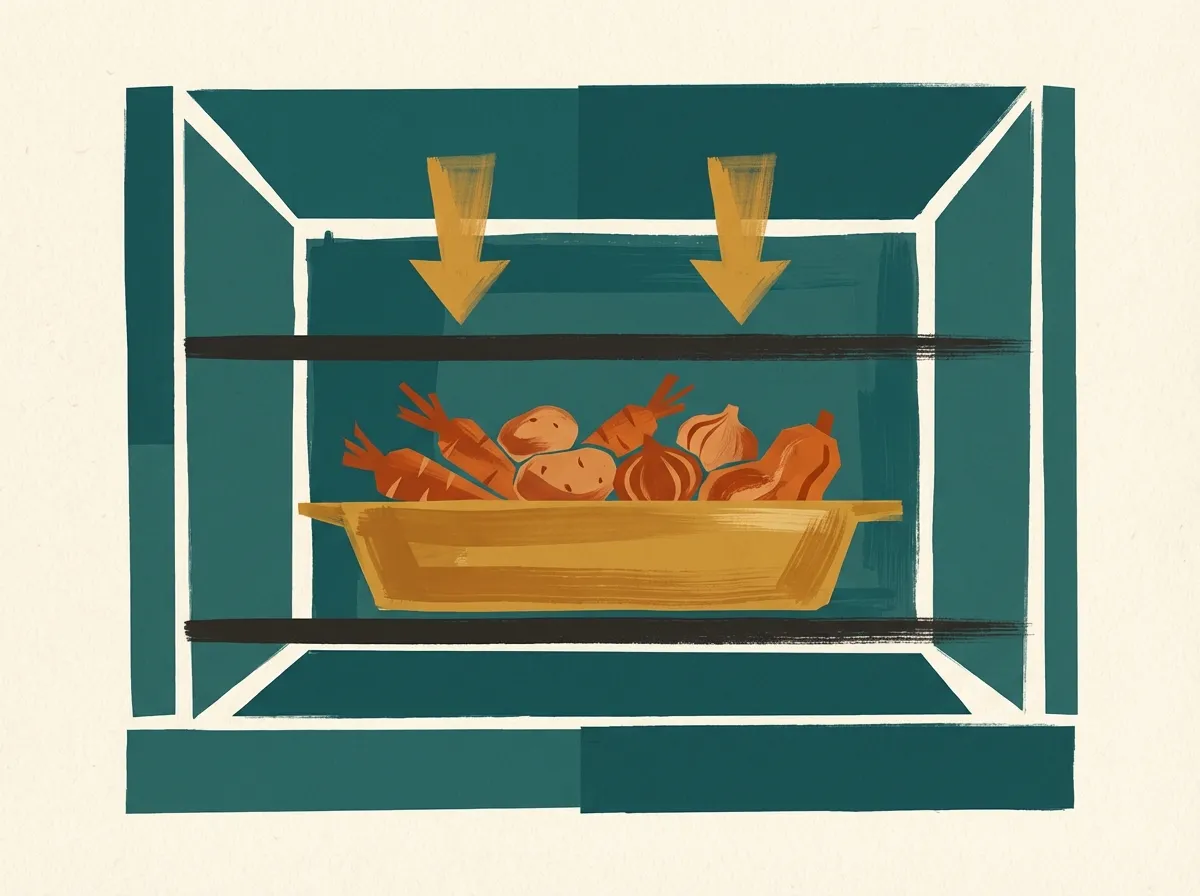
Rack position changes what happens. Middle rack gives balanced top and bottom heat — the right default for most dishes. Lower rack brings the food closer to the bake element, which means more bottom heat: better for crisping the base of bread, pizza, and pie shells. Upper rack brings more top heat: use it for finishing with colour, browning the top of a gratin, or broiling. In conventional mode, avoid cooking on more than one rack at a time — the second pan shadows the first from radiant heat and one of them will suffer. In convection, two racks is possible if you rotate pans halfway through.
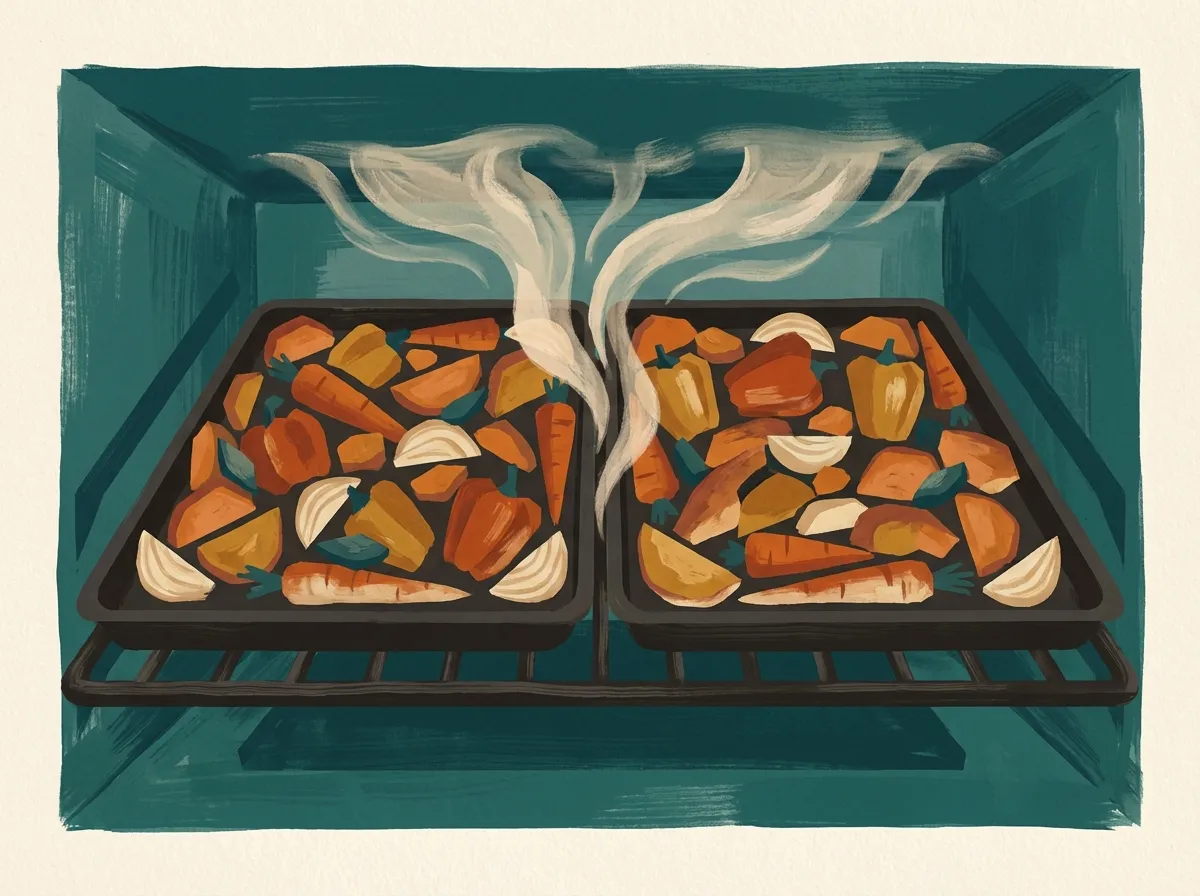
Use the right pan. Dark pans absorb more radiant heat and produce a darker, crispier bottom. Light-coloured or shiny pans reflect heat and produce a paler result. For cookies, this is the difference between chewy centres and crispier bases. For roasting vegetables, use a dark rimmed baking sheet and give pieces enough space that steam can escape — crowded pieces braise in their own moisture instead of roasting.
Don’t crowd the oven. One baking sheet per rack in conventional mode. Crowding traps the steam released by food and turns a dry roasting environment into something closer to braising. The surface temperature stays lower, browning is delayed, and the food may never develop colour at all.
What works well and what doesn’t
Works well:
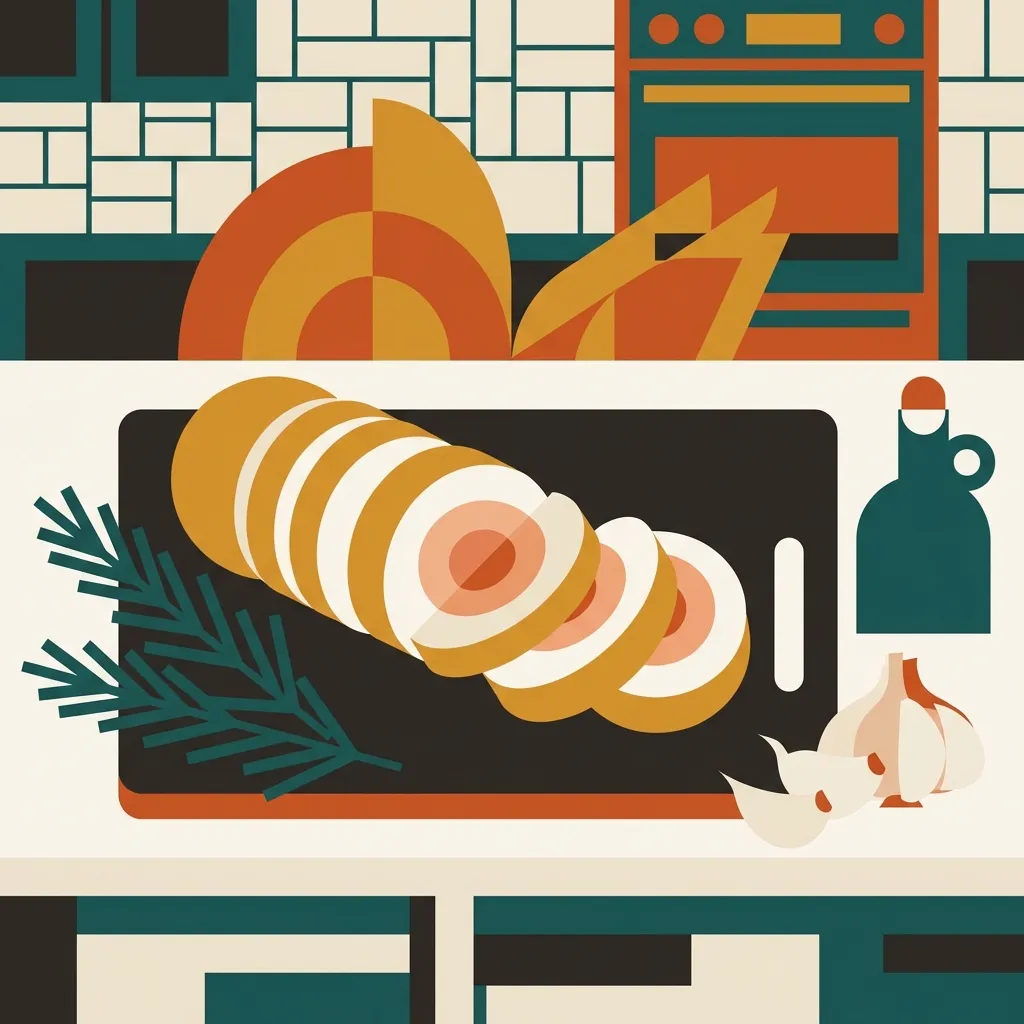
Whole birds and bone-in cuts are where the oven genuinely excels. The combination of radiant heat from all sides, fat slowly rendering under the skin, and dry circulating air crisping the exterior is hard to replicate with any other appliance. A chicken roasted at 200°C for 70 minutes produces results an air fryer can approximate in a small bird but can’t match at scale. (Source: López-Alt, J. Kenji. The Food Lab. W.W. Norton, 2015)
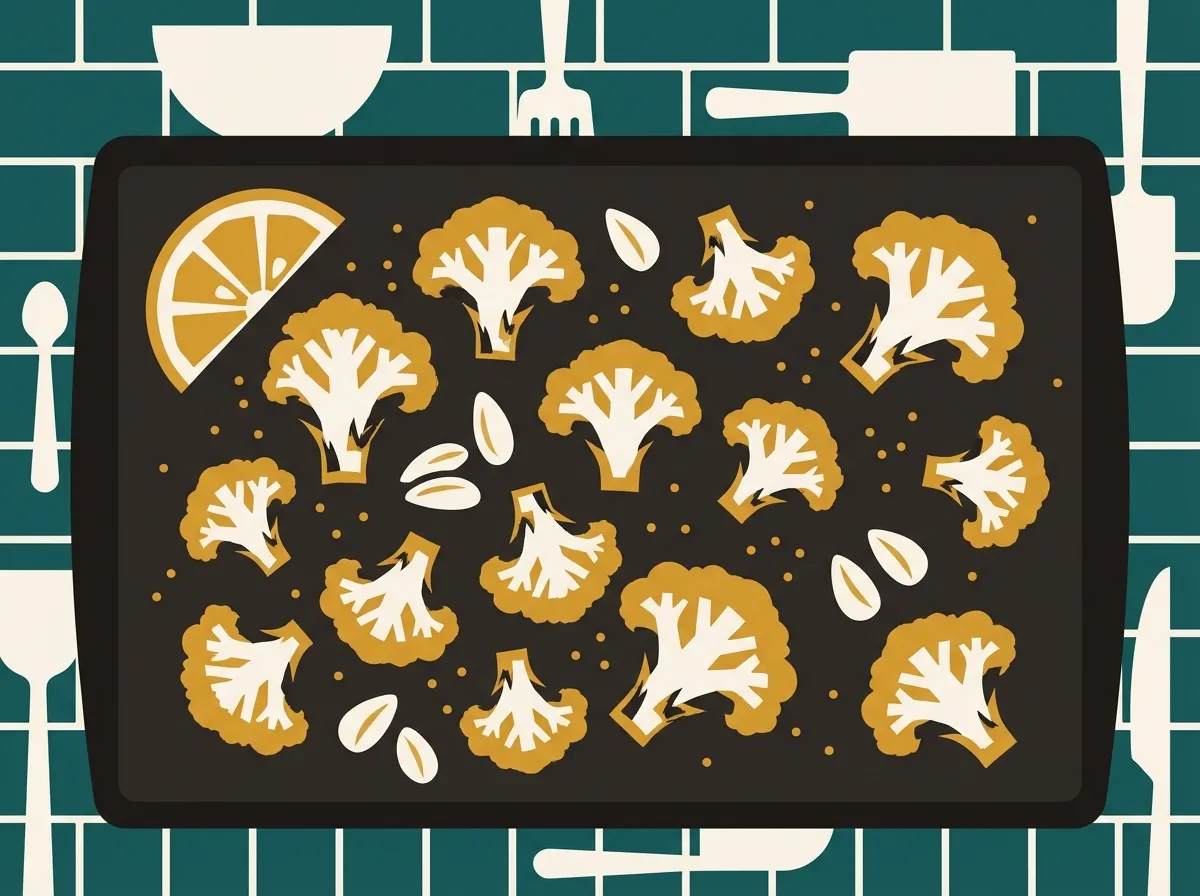
Sheet-pan vegetable roasting is one of the best uses for a hot oven. High heat caramelises the natural sugars in vegetables in a way that boiling, steaming, or even a gentle sauté cannot match. Broccoli at 220°C develops charred, nutty edges. Carrots concentrate in flavour and develop colour on their cut faces. The key is high heat, space between pieces, and a preheated dark pan.
Baking is the oven’s most precise domain. The consistent radiant heat is what sets bread crust, creates the Maillard browning on cookie surfaces, and causes pastry to puff and then hold its shape. No other appliance comes close for bread or laminated doughs.
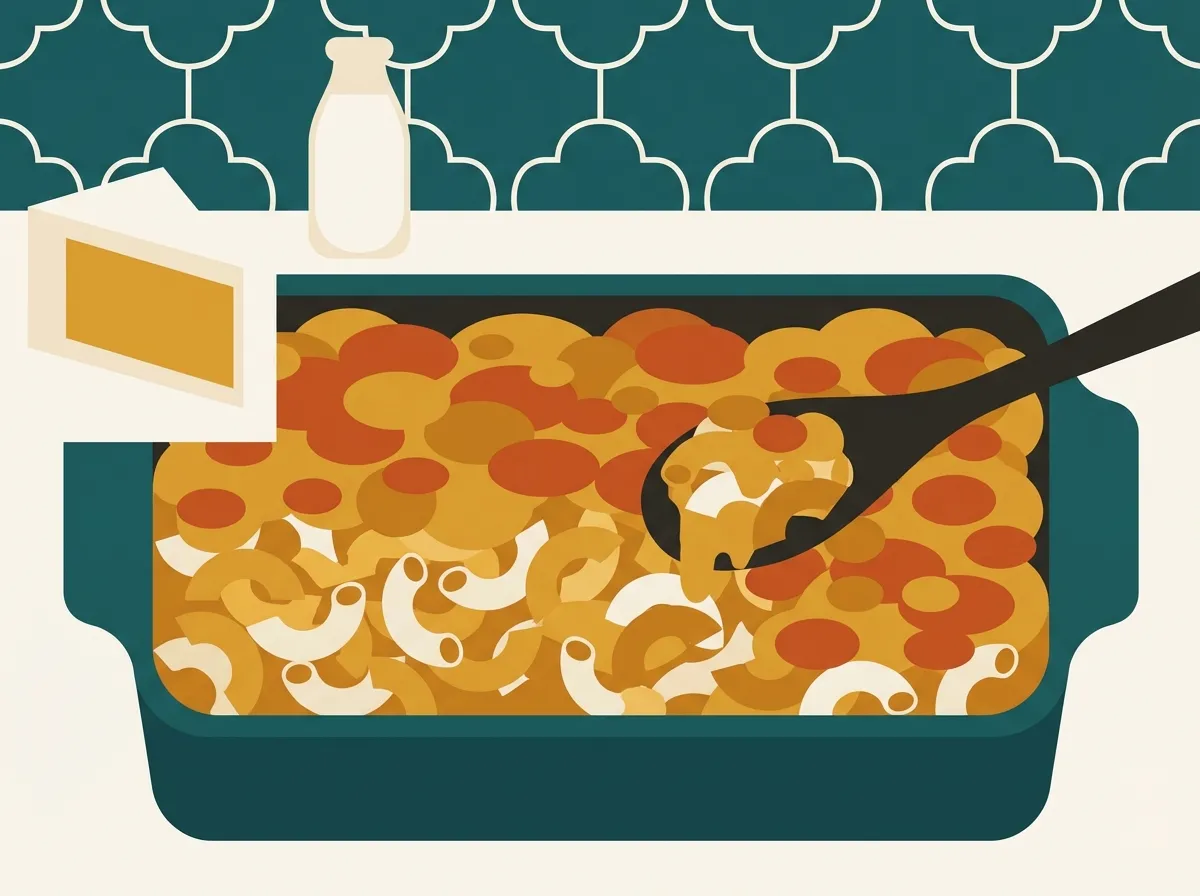
Gratins, casseroles, and baked pasta dishes use the oven’s sustained moderate heat to cook through gently while the top browns. The combination of low-and-slow heating with a final burst of top heat (or a switch to broil) is something only an oven does efficiently at this scale.
Doesn’t work as well:
Very quick weeknight cooking. The overhead cost of preheating — 20 to 25 minutes before the oven is truly ready — makes the oven inefficient for small, fast dishes. An air fryer or stovetop beats it for speed when cooking for one or two people.
Precise internal temperature with a narrow window. The oven’s temperature fluctuations (that 10–20°C cycling) make it harder to hold food at an exact internal temperature without overshooting. Sous-vide handles this better by design.
Braising large tough cuts. A Dutch oven on the stovetop or a pressure cooker gets tough collagen-rich cuts to tenderness faster and with more predictable results. The oven can braise, but it’s the slowest route.
Steaming. There’s no native mechanism for steam in a standard home oven. You can add a pan of water on the lower rack to create some steam in the first minutes of bread baking, but for actual steaming of vegetables or fish, a dedicated steamer or stovetop setup is more effective.
Common mistakes and how to fix them
Trusting the oven’s built-in thermostat. Most home ovens run 10–25°C off their displayed temperature — sometimes more after years of use. Some run hot, some run cold, some have hot spots on one side. A standalone oven thermometer costs around $15 and is the single most impactful oven upgrade you can make. Put it in the centre of the oven, note the difference from the set temperature, and adjust accordingly. Do this once.
Opening the door repeatedly. Every time the oven door opens, 20–30°C drops from the cavity and takes 3–5 minutes to recover. For bread and cakes where structure is still setting, this can cause collapse. Use the oven light to check progress without opening. If you must open the door, do it decisively and close it quickly. Resist the urge to peek every 5 minutes.
Wrong rack position. The bottom rack concentrates heat on the base of the pan — useful for pie shells, bad for roasting chicken (the bottom will burn before the top colours). The top rack concentrates heat on the top — good for broiling and browning gratins, bad for bread that needs even heat to rise. When in doubt, middle rack.
Overcrowding the pan. Vegetables piled on top of each other will steam, not roast. The moisture they release has nowhere to go. Leave visible space between pieces on the pan and use two pans side by side rather than crowding one. If you’re using conventional mode, use one rack; convection gives you more flexibility.
Putting food in before the oven is ready. Even a few minutes’ shortcut on preheat shows in the result. Food placed in a partially heated oven spends time in a warm, steamy environment before the temperature climbs to roasting range. The exterior doesn’t set quickly enough, and you lose the initial sear that locks in surface texture.
Cleaning and maintenance
Self-cleaning cycles (pyrolytic cleaning) heat the oven to around 480°C, incinerating all residue down to ash that wipes away with a damp cloth. Effective, but the cycle takes 2–4 hours, produces significant smoke and smell, and locks the oven door throughout. Run the self-clean cycle only when the oven is badly fouled — not as routine maintenance. Open windows and run the kitchen exhaust fan. Do not use aerosol oven cleaner in a self-cleaning oven; the coatings on the interior walls are incompatible with the chemical sprays.
For routine cleaning between uses: wipe spills immediately after each cook while the oven is still warm but not hot. Fresh spills wipe away in seconds; baked-on ones take much longer. A paste of baking soda and water applied to baked-on grease and left overnight softens it so it wipes off without abrasives or harsh chemicals. The oven floor accumulates the most residue from dripping roasting pans — a sheet of aluminium foil placed on the rack below the roasting pan (not on the oven floor itself, which can block airflow and damage the element) catches most of it.
Oven racks: remove them, lay them in the bathtub or sink with hot soapy water, and let them soak for 30 minutes. Baked-on grease releases easily after soaking and comes off with a non-scratch scrubbing pad. A light coat of cooking oil rubbed onto clean, dry racks prevents food from sticking and makes future cleaning easier.
If your oven runs consistently hot or cold after you’ve confirmed this with a thermometer, most modern ovens have a temperature offset setting accessible through the control panel — typically buried a few levels into the settings menu. Check the manual for your specific model. A 15–20°C offset is within the range of a typical calibration adjustment. If the error is larger than that, the thermostat may need professional service.
Sources
- McGee, Harold. On Food and Cooking: The Science and Lore of the Kitchen. Scribner, 2004.
- López-Alt, J. Kenji. The Food Lab: Better Home Cooking Through Science. W.W. Norton & Company, 2015.
- USDA Food Safety and Inspection Service. Safe Minimum Internal Temperatures. USDA, 2023.