In this guide
Key facts: Air fryers circulate hot air at 150–200 km/h inside the cooking chamber, compared to 25–30 km/h for conventional convection ovens. They reach cooking temperature in 2–3 minutes versus 15–20 minutes for a full-size oven, and use approximately 1,500 W versus 2,400 W for a standard oven element.
How an air fryer actually works
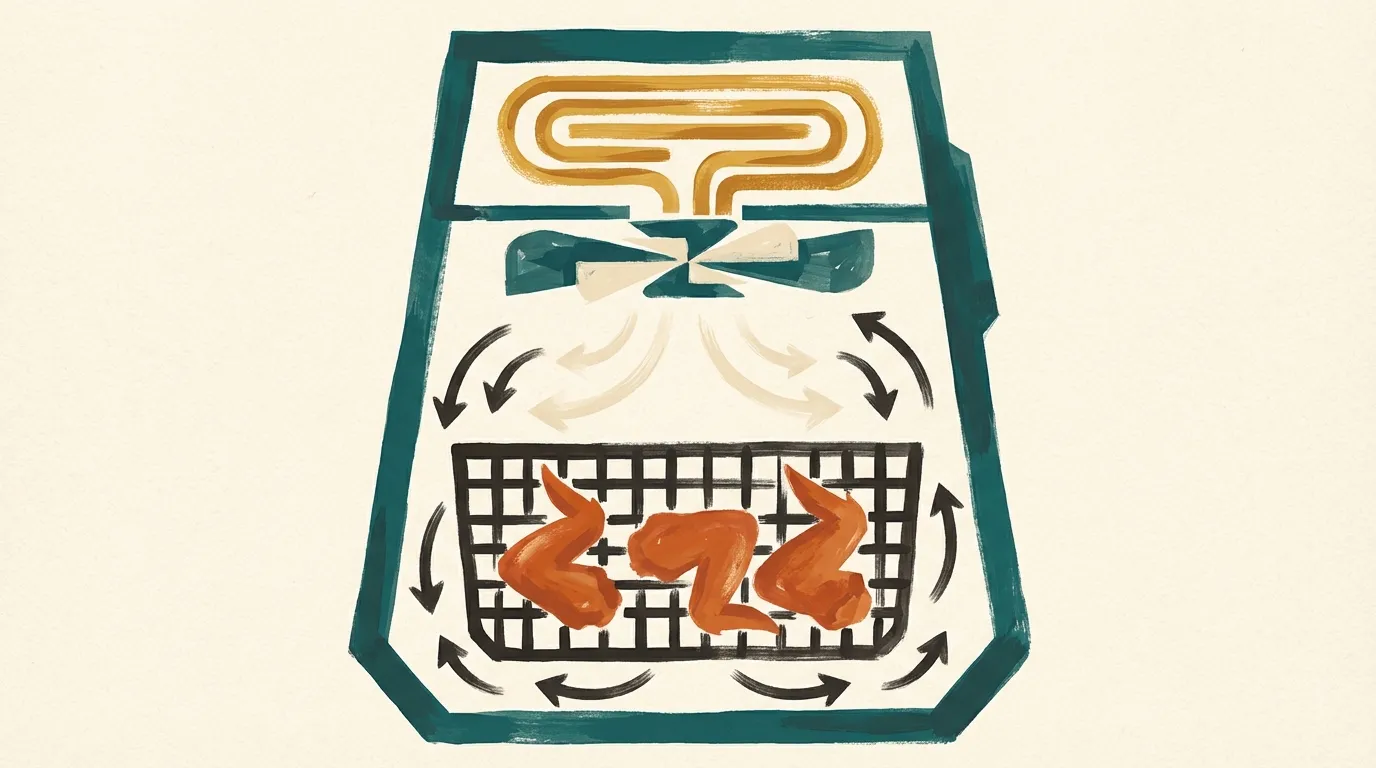
An air fryer is a compact convection oven with a more powerful fan than anything you’d find in a standard kitchen oven. Hot air gets generated by a heating element near the top of the unit, then blasted downward and around the food by a high-speed fan — typically moving at 150 to 200 km/h inside the chamber. The food sits in a perforated basket, which lets that moving air hit every surface simultaneously instead of only the bottom.
The compact size matters as much as the fan. Because the cavity is small — usually 3 to 7 litres — the air has less distance to travel and maintains higher velocity around the food. In a full-size oven, even with convection on, the air slows down significantly before it reaches the food. In an air fryer, the food is essentially inside the fan’s jet. That’s what drives the browning.
There’s no frying happening. No oil bath. The name is marketing that stuck.
Why the results are different from an oven
The key difference is the rate of surface moisture removal. When food heats up, water inside migrates to the surface and has to evaporate before browning can start — you can’t brown a wet surface. In a conventional oven, moisture sits in the cavity and the slow-moving air doesn’t carry it away quickly. In an air fryer, high-velocity air constantly strips away that surface humidity. The food’s exterior dries out faster, and once it’s dry, Maillard browning and caramelization begin at lower effective temperatures and in less time. (Source: McGee, Harold. On Food and Cooking. Scribner, 2004, pp. 777–779)
Preheating also behaves differently. An air fryer’s small thermal mass means it reaches cooking temperature in 2 to 3 minutes. A conventional oven takes 15 to 20 minutes. If you skip preheating in a regular oven, the food sits in a warm-but-not-hot environment for the first several minutes and steams rather than sears. In an air fryer, preheating takes almost no time — but it still matters. Loading cold food into a preheated basket gives you a better initial sear than loading into a cold unit.
The other difference is carryover cooking. Because the food is in a small hot cavity with intense airflow, it continues cooking quickly after you stop the timer. Pull proteins a few degrees before your target temperature.
Temperature guide
Temperature choice in an air fryer follows the same logic as conventional cooking, but everything runs a touch hotter because the intense airflow can dry out food faster. When in doubt, drop the temperature 10–15°C (about 25°F) compared to what you’d use in a regular oven and check doneness earlier.
| Food | Temp | Notes |
|---|---|---|
| Chicken wings | 200°C (400°F) | Renders fat under skin; pairs with timing guide below |
| Chicken bone-in (thighs, drumsticks) | 190–200°C (375–400°F) | Needs heat to drive through the bone |
| Chicken boneless (breasts, thighs) | 180–190°C (360–375°F) | Lower temp keeps lean meat from drying out |
| Fish (salmon, cod, halibut) | 180–190°C (360–375°F) | Salmon skin: blast 200°C first 3 min, then hold |
| Dense vegetables (carrots, beets, potatoes) | 190°C (375°F) | Brown before softening; 20–25 min |
| Quick vegetables (asparagus, zucchini, thin beans) | 200–210°C (400–410°F) | Brown before collapse; 8–12 min |
| Frozen foods | 180–190°C (360–375°F) | 15°C below package temp; check 3–5 min early |
| Reheating | 160–175°C (320–350°F) | Warm through only; pizza at 170°C for 3–4 min |
Timing guide
These are starting points. Your air fryer model, the size of the pieces, and whether the food was fridge-cold or room temperature all affect timing. Use a probe thermometer for proteins.
| Food | Temp | Time | Doneness cue |
|---|---|---|---|
| Chicken wings | 200°C (400°F) | 22–25 min | Flip once. Skin visibly crisp; 74°C internal |
| Boneless chicken thighs | 190°C (375°F) | 18–20 min | Well-browned exterior; 74°C internal |
| Salmon fillet (3 cm thick) | 190°C (375°F) | 10–12 min | No flip. Flakes at fork; 52–58°C internal |
| Shrimp | 200°C (400°F) | 6–8 min | Shake once. Pink, slightly curled — not tightly coiled |
| Broccoli florets | 200°C (400°F) | 10–12 min | Shake once. Charred edges; stems tender at fork |
| Brussels sprouts (halved) | 190°C (375°F) | 15–18 min | Shake once. Cut faces deeply brown; slightly soft when squeezed |
| Frozen french fries | 185°C (365°F) | 18–22 min | Shake twice. Golden and crisp throughout |
| Breaded cutlets (chicken, pork, veal) | 190°C (375°F) | 12–15 min | Flip at 8 min. Breading golden; 74°C (poultry) or 63°C (pork) |
| Reheating pizza | 170°C (340°F) | 3–4 min | Cheese bubbling; crust re-crisp |
| Reheating fries | 190°C (375°F) | 4–5 min | Shake once. Crisp throughout |
How to get crispier results
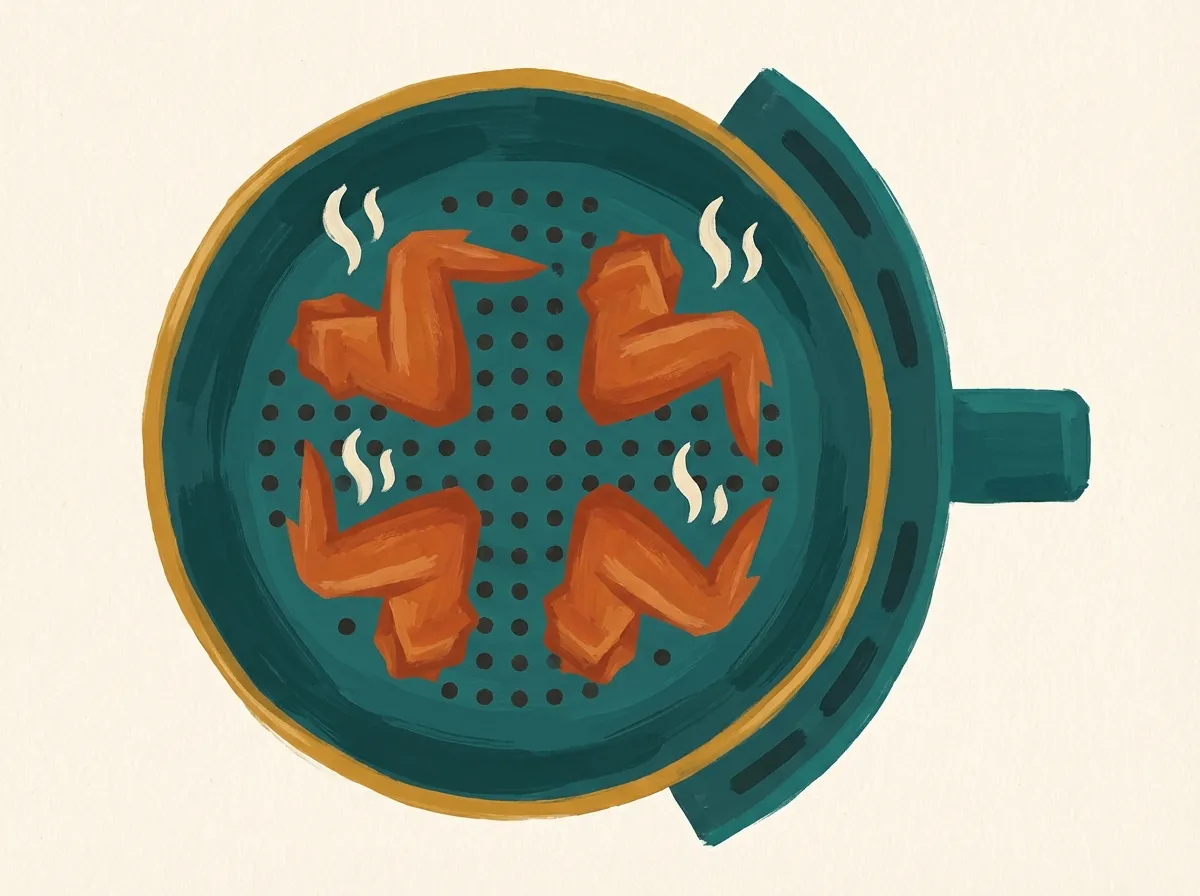
Crispiness in an air fryer comes down to one thing: dry surfaces. Moisture is the enemy of browning. Every technique in this section is about either removing moisture before cooking or preventing it from collecting during cooking.
Pat food dry before it goes in. This is the single most impactful thing you can do. Paper towels on both sides, press firmly, and let the food sit uncovered for 5 minutes after patting. Chicken thighs out of the fridge have condensation on the surface — that moisture steams the skin before it can crisp. Dry shrimp, dry tofu, dry vegetables all brown faster.
Don’t skip the oil, but don’t overdo it. The air fryer doesn’t need oil the way a deep fryer does, but a thin coating of oil on the food surface helps browning. Oil conducts heat better than air and helps the Maillard reaction proceed faster. (Source: Maillard, L.C. Action des acides aminés sur les sucres. C.R. Acad. Sci., 1912) The key word is thin: brush or spray the food until it glistens, not until it drips. Too much oil pools in the bottom of the basket, smokes, and steams the food rather than crisping it. One teaspoon of oil for a basket of vegetables is usually enough.
Give food space. Overcrowding is the second-biggest mistake people make. When food is piled up, the air can’t circulate around individual pieces, and moisture released during cooking has nowhere to go. The result is steamed food, not crisped food. Cook in a single layer with gaps between pieces. If you have more food than fits, cook in two batches. A second batch cooked properly is better than one batch cooked wrong.
Shake or flip halfway through. The basket side closest to the heating element browns faster. Shaking redistributes pieces and ensures even browning. For larger items like chicken pieces or cutlets, flip manually rather than shaking.
Let the air fryer preheat. Even 3 minutes of preheating makes a difference. Cold food going into a cold basket doesn’t start browning immediately — it steams as everything heats up. Preheated basket, food that goes in dry, single layer: that’s the setup for maximum crispiness.
Rack inserts for certain foods. If your air fryer came with a rack or if you buy one, use it for items where you want airflow under the food — like larger fish fillets or chicken breasts. Elevating the food off the basket floor improves bottom crisping.
What works well and what doesn’t
Works well:
Bone-in chicken pieces are the air fryer’s strongest use case. The fat under the skin renders into the meat as the skin crisps above it, giving you results that rival deep frying for a fraction of the effort and oil. Wings and thighs are the most forgiving cuts — their fat content prevents them from drying out even if you go slightly over time.
Breaded and coated foods come out well because the porous coating absorbs the small amount of oil you apply and develops an even crunch. Panko-crusted items, falafel, and arancini all work. The air fryer reproduces the texture of shallow frying without the mess.
Vegetables that benefit from browning — broccoli, Brussels sprouts, cauliflower, asparagus — are excellent. The high heat caramelizes their natural sugars and concentrates their flavour in a way that boiling or steaming can’t match. The key is not overcrowding and using enough heat to get colour before the vegetable softens.
Frozen convenience foods are one of the air fryer’s most practical applications. Frozen fries, fish sticks, spring rolls, taquitos — anything designed to be baked from frozen in a conventional oven comes out noticeably better in the air fryer: crispier, faster, without heating up the whole kitchen.
Reheating leftovers is where the air fryer genuinely outperforms every other option. Pizza re-crisps perfectly. Leftover fried chicken regains a satisfying crunch. Even reheated fries become edible again. This alone justifies the counter space for many people.
Doesn’t work:
Wet batters (beer batter, tempura batter) don’t work because the batter drips through the basket before it can set. You need a grate or parchment with holes underneath, but even then the results are inconsistent. Use a shallow pan of oil on the stove for anything in a liquid batter.
Large roasts won’t fit in most air fryer baskets, and even if they could, the airflow becomes uneven around a large mass of meat. A whole chicken over 1.5 kg is borderline; anything larger belongs in the oven. Pork shoulder, leg of lamb, and large beef roasts all cook better using conventional methods.
Truly delicate fish — sole, flounder, very thin tilapia — tend to fall apart because the powerful airflow buffets them physically. These fish do better in a pan. Salmon, cod, and halibut are sturdy enough to handle it.
Anything that needs to cook in liquid — soups, stews, braises, risotto — obviously doesn’t work. The air fryer has no capacity to hold liquid and no mechanism for gentle, moist heat. Use a pressure cooker or Dutch oven for these.
Leafy greens like spinach or kale will fly around the basket and burn unevenly. They need to be anchored down or wrapped. Even then, results are unpredictable.
Common mistakes and how to fix them
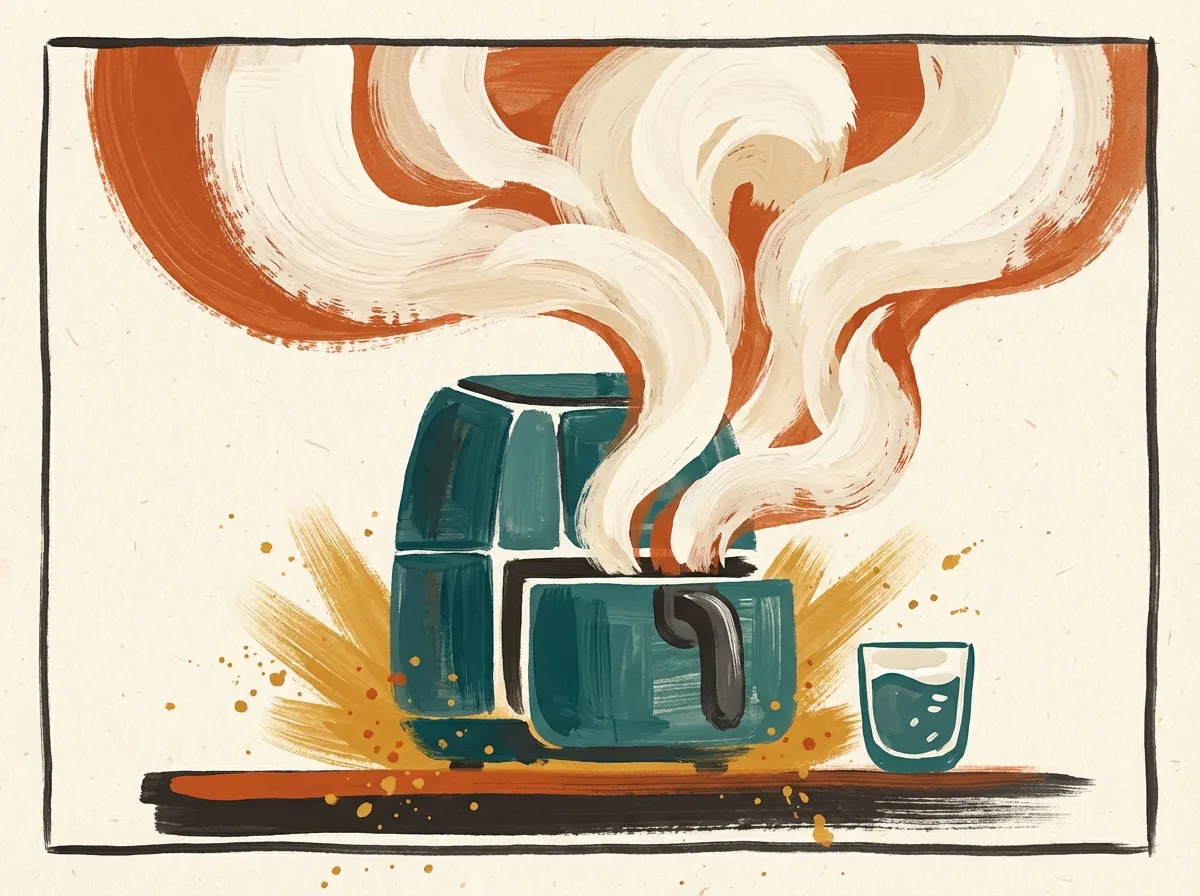
Soggy food instead of crispy food. The cause is almost always one of three things: the food was too wet going in, the basket was overcrowded, or the temperature was too low. Pat the food dry, cook in a single layer, and make sure the air fryer is fully preheated. If you’re cooking something high in moisture — zucchini, mushrooms, eggplant — salt the pieces 15 minutes before cooking, blot off the liquid that draws out, then cook. This dramatically reduces the steam they release in the basket.
Smoke coming from the air fryer. This usually means excess oil or fat is dripping onto the heating element or into the bottom of the unit. Add a tablespoon of water to the drawer beneath the basket (not the basket itself) — this cools the dripping fat before it smokes. If you’re cooking fatty meats, trim excess fat before cooking or check the drawer partway through and pour off accumulated fat.
Uneven cooking. One side is brown, the other is pale. This happens when you don’t flip or shake, or when the pieces are very different in size. Shake vegetables once or twice during cooking and flip proteins at the halfway mark. Cut pieces to a similar size before cooking — a mix of large and small broccoli florets will result in the small ones burning while the large ones are still underdone.
Food sticking to the basket. This is usually from insufficient oil or damaged non-stick coating. Brush or spray the basket lightly with oil before loading food. Avoid metal utensils that scratch the non-stick surface — use silicone or wooden tongs. Once the coating is damaged, food will stick consistently and the basket needs replacing.
Overcooking on the outside, underdone inside. Temperature is too high or pieces are too thick. Lower the temperature by 10–15°C (25°F) and add time. For thick chicken pieces (over 3 cm), consider a 180°C (360°F) temperature so the exterior doesn’t outpace the interior. A probe thermometer removes the guesswork entirely.
Cleaning and maintenance
Clean the basket and drawer after every use. Grease left in the unit will smoke on the next cook. Most baskets are dishwasher-safe, but check your manual — repeated dishwasher cycles degrade non-stick coatings faster than hand washing. Hand washing with warm soapy water and a soft sponge takes 2 minutes and preserves the coating longer.
For stuck-on food, soak the basket in hot soapy water for 10 minutes rather than scrubbing hard. Baked-on grease releases easily once softened. Never use abrasive pads or metal scourers on non-stick surfaces.
Wipe the interior of the air fryer (the chamber, not just the basket) with a damp cloth every few uses. The heating element area accumulates grease splatter that causes smoke. Let the unit cool completely before cleaning. Never submerge the main unit in water.
If your air fryer starts to smell when preheating, that’s usually residue burning off from a previous cook. A thorough clean will eliminate it. If the smell persists after cleaning, inspect the heating element for visible buildup and wipe it gently with a damp cloth when the unit is cold.
Check the basket lining every few months for scratches. Once the non-stick surface is peeling or heavily scratched, replace the basket. Cooking on damaged non-stick is both a performance issue (food sticks and tears) and a practical one (flakes of coating end up in your food).
The air fryer doesn’t need any special maintenance beyond cleaning. There are no filters to replace, no calibration needed. If it starts cooking faster or slower than expected, your model may be aging — heating elements weaken over time and can affect results on older units.
Sources
- McGee, Harold. On Food and Cooking: The Science and Lore of the Kitchen. Scribner, 2004.
- Maillard, L.C. “Action des acides aminés sur les sucres.” Comptes rendus de l’Académie des Sciences, 154, 1912.
- USDA Food Safety and Inspection Service. Safe Minimum Internal Temperatures. USDA, 2023.