Renardo Cuisine × Statistics Canada · 2026 Edition
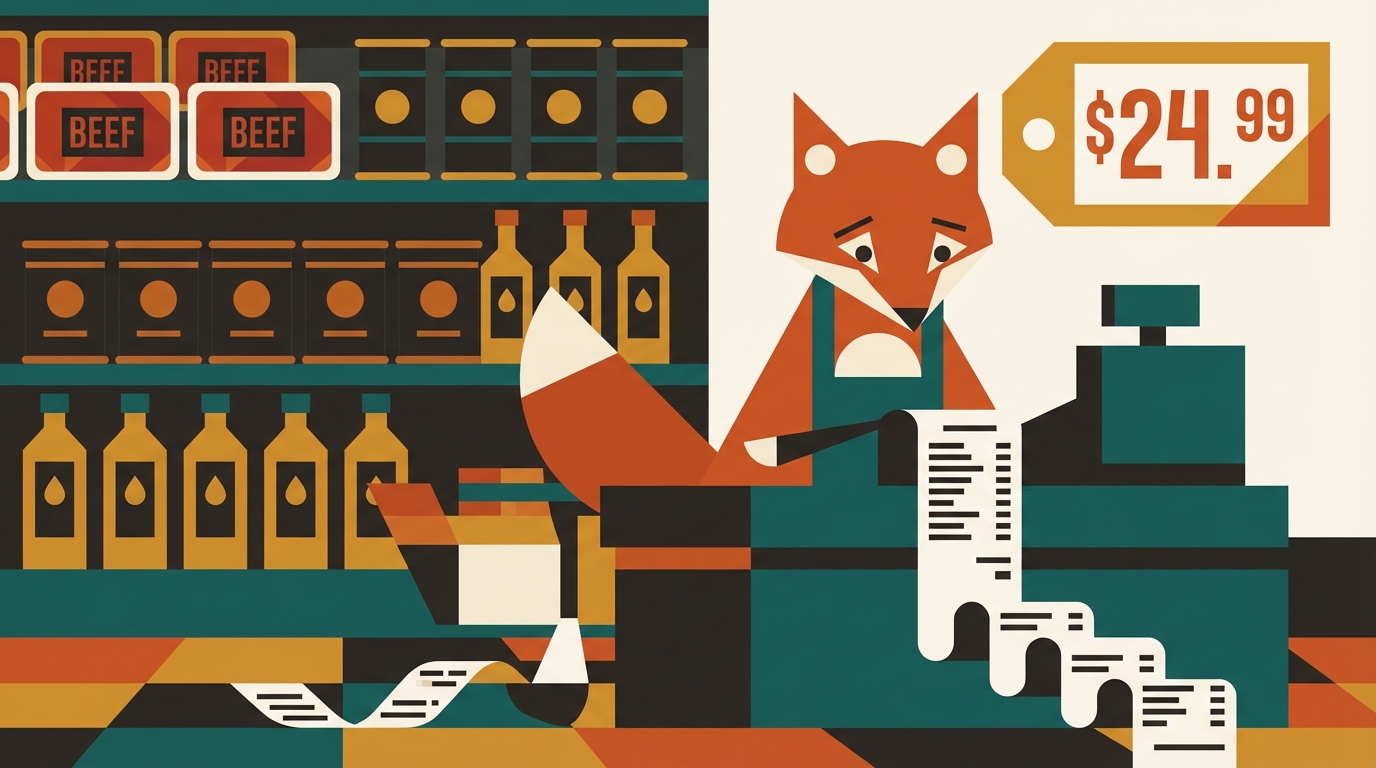
Average grocery price change in 2025, across 92 items tracked by Statistics Canada. But that number hides a much more interesting story.
The smart swap
For the price of 1 kg of beef ribs,
you can buy 8.5 kg of chicken drumsticks.
The full picture
Each line represents one food item tracked every month by Statistics Canada. Lines angling upward got more expensive. Lines angling down got cheaper.
The story splits into two very distinct camps.
The bad news
Beef sirloin, beef ribs, and coffee together account for a disproportionate share of Canada's 2025 grocery pain. Beef alone averaged +27% across all cuts.
The good news
Average fresh produce prices landed at −0.8% for the year. Olive oil peaked above $16/kg in early 2025 and fell back to $12 by January 2026 — a genuine win for anyone who cooks Mediterranean.
The smart shopper move
Beef averaged +27% across all cuts. But poultry and canned goods barely moved. Here's the full protein lineup, ranked cheapest to most expensive.
★ Best-value proteins · Per kg · Source: StatCan Jan 2026
By the aisle
Average price change per food category, Jan 2025 → Jan 2026. All items equally weighted within each group.
Fresh produce at +0.9% is essentially flat. Beef is an outlier — removing it, the average across all other categories is under +4%.
The real number
15 common staples, one unit each, priced in January 2025 vs. January 2026.
Timing is everything
The 20 most price-volatile groceries in Canada, month by month. Teal = cheapest month for that item. Orange = most expensive. Each row is normalized to its own range — this shows seasonal patterns, not absolute price.
Source: Statistics Canada, table 18-10-0002-01 (Average retail prices for food). Rows normalized per-ingredient.
Your January shopping guide
Based on 13 months of price data. "Stock up now" items are at or near their lowest price of the past year. "Near peak" items are at or near their highest — worth watching before buying in bulk.
Stock up now
Near annual peak
Based on Statistics Canada national median prices, Jan 2025–Jan 2026. Seasonal patterns vary by region. Items with less than 8% price variance across the year are excluded.
The 2026 grocery playbook
Sirloin up 42%, ribs up 39%. If your grocery bill grew last year, this is why. Beef alone moved the overall average up by several percentage points.
Chicken drumsticks at $6.01/kg vs beef ribs at $51.18/kg. The math is simple. Canned tuna at $1.52/kg is the champion of value.
Fresh produce averaged −0.8% for the year. Frozen goods rose 4.9%. The fresh section is the better deal right now — and it's where seasonal savings hide.
See Renardo recipes built around the best-value ingredients →
Price data sourced from Statistics Canada, table 18-10-0002-01 (Average retail prices for selected food products, by city). All prices are national median values in Canadian dollars. Period covered: January 2025 to January 2026 (13 monthly data points). Percentage changes represent the difference between the January 2025 and January 2026 observations. The headline average (+4.2%) is the unweighted arithmetic mean across all 92 tracked food items. Heat grid rows are normalized per-ingredient: each ingredient's minimum observed price across all months maps to the teal end of the scale, and its maximum maps to orange — this shows seasonal patterns independent of absolute price level.